
How to Check Criminal History in Price
A Price record search should begin with the event the reader wants to understand. The Price City Police Department holds city incident narratives and its own arrest reports. Carbon County Jail holds the booking record when Price officers take someone into county custody. Carbon County Justice Court keeps filed class B and C misdemeanor, infraction, and ordinance matters from Price. Seventh District Court keeps class A misdemeanors and felonies.
No single Price database combines those sources. Work from the newest local record toward the final case result, and use a focused request when an online channel does not show enough.
- Ask Price Police for the incident or arrest record using its official GRAMA form.
- Check Carbon Current Bookings or call the county jail for recent custody information.
- Route lower cases to Carbon County Justice Court and serious cases to Seventh District Court.
- Use Utah XChange or the correct clerk to read the filed counts, events, plea, and disposition.
- For your own Utah repository history, use BCI Right of Access rather than a public name search.
That order keeps a preliminary jail charge from being mistaken for the charge a prosecutor filed. It also makes clear which office can correct or explain each record.
Price Criminal Records Across Three Counters
Price is Carbon County's seat and largest city, with 8,216 residents in the 2020 Census. Its role as a county hub brings several justice offices into one city, but not under one records desk. Price Police works from 910 North 700 East. The sheriff and jail are at 240 West Main Street. Carbon County Administration, which houses the shared Justice Court and GRAMA officer, is at 751 East 100 North. Seventh District Court is at 149 East 100 South.
The short distance between the offices can hide an important legal split. A police narrative stays with Price Police. A booking entry belongs to the jail. A lower filed case belongs to the Justice Court, and a felony file belongs to the state district court. Sending one broad request to City Hall will not produce the other custodians' records.
The Price Police Department
The Price City Police Department is the direct source for reports created by its officers. The office is at 910 N 700 E, Price, UT 84501. Its public hours are Monday through Friday, 8 a.m. to 5 p.m. Call 435-636-3190 during office hours or 435-637-0890 for nonemergency dispatch after hours. The department also publishes fax number 435-637-1888.
Price links a GRAMA Record Request and a separate Right of Access Waiver. They serve different purposes. The GRAMA form asks the city to review a government record for public release under Utah law. The waiver concerns the subject's access route. The official page exposes those links but did not reveal every required checkbox, identification rule, fee, or notarization term in indexed text. Supply clear contact information, a record description, date or case details when known, a delivery preference, and a signed request without guessing at unstated fields.
Price City Police Department
910 N 700 E
Price, UT 84501
435-636-3190
Monday through Friday, 8 a.m. to 5 p.m.
Price Police does not publish a searchable arrest blotter or incident database. A direct record request is therefore the main city channel.
Price Police Record Forms Compared
Choosing the right Price form avoids delay. The GRAMA request is the normal route for a releasable government record. A Right of Access Waiver is distinct and should not be treated as the same public request. Other forms on the police page include citizen or personnel complaints and statements. Those documents may relate to an event, but they are not substitutes for asking for the finished police report.
| Price channel | Best use | What to include |
|---|---|---|
| GRAMA Record Request | Request a releasable city police record | Contact details, clear description, date or case identifiers, preferred delivery |
| Right of Access Waiver | Use the separate subject-access route documented by Price | Follow the current form rather than assuming GRAMA terms |
| Statement form | Provide an account to the department | Use only when the department directs it |
| Citizen or personnel complaint | Submit a complaint about department conduct | Not a police-report request |
Domestic-violence reports show why a Price police narrative can be more detailed than a booking line. Department policy calls for facts such as disposition, classification, relationship or marital status, and arrest or no-arrest reasons. Release may still redact victim details, juvenile information, and protected investigative material.
Arrests and Bookings in Price
Price has no published city jail or city custody roster. When Price Police makes an arrest that results in county booking, Carbon County Jail is the custody channel. Its Current Bookings interface may show recent custody and preliminary charges. The county warns that those charges can change and that every person is presumed innocent unless proven guilty.
Start with Carbon Current Bookings. If the interface does not resolve the question, call the jail at 435-636-3254 or visit 240 W Main Street. The jail is open continuously. For releasable material not displayed online, use the sheriff's GRAMA route. Return to Price Police for the actual city arrest narrative because centralized booking does not transfer ownership of the police report.
A Price booking entry is not the final criminal record. Read the later court file for the charge a prosecutor chose, any plea, the outcome, and the sentence. The countywide arrest history resource gives the full booking and agency fallback chain without changing the city police request route.
Price Arrest Records Change Channels
A Price arrest can produce several records in a short span. The officer creates the incident and arrest report. Carbon Jail creates the booking entry. A fingerprintable arrest sends identity data into the BCI pipeline. If charges are filed, court staff create a case record. The final disposition should later return to the state repository.
This sequence explains why two official screens may differ without either being false. The booking page can still show the arresting allegation while a Price case proceeds on amended or fewer counts. BCI may wait on a matched disposition. Court data may be sparse for an old converted file. Compare agency, date, court, and case number before deciding that records refer to the same event.
Price record path: Price Police › Carbon County Jail › Carbon County Justice Court or Seventh District Court › Utah Bureau of Criminal Identification.
Price Municipal Court Records
Price does not maintain a separate public lower-criminal-case database. Carbon County's current court information routes Price class B and C misdemeanors, infractions, and city ordinance cases to Carbon County Justice Court in Suite 1600 at 751 E 100 N. The counter is open Monday through Friday, 8 a.m. to 5 p.m., and the court phone is 435-636-3289. Class A misdemeanors and felonies go to Seventh District Court at 149 E 100 S, 435-264-4640.
| Court name | Carbon County Justice Court for Price lower matters; Seventh District Court for class A and felony matters. |
|---|---|
| Case types heard | Price ordinances, infractions, and most class B/C misdemeanors at Justice Court. |
| Case lookup channel | Justice Court counter or phone, courthouse XChange access, or remote XChange subscription. |
| What the docket shows | Filed counts, dates, parties, events, pleas, disposition, sentence, and available public documents. |
| Copies and fees | Remote public electronic documents cost $1 where available; ask the clerk about other copies. |
Pending defense discovery does not use public GRAMA. A represented defendant works through counsel. A person representing themselves contacts the assigned prosecutor. Public case inspection and party discovery are different legal channels.
Price Court Records and ePayments
Utah ePayments accepts a case number or citation number, but payment is not a Price court-record search. Those numbers are not unique across every location. The user must confirm the name and court shown before sending funds. The system may also display a delinquency or warrant fee.
The Utah Courts routing material illustrates how state court tools connect a place such as Price to the correct court channel.
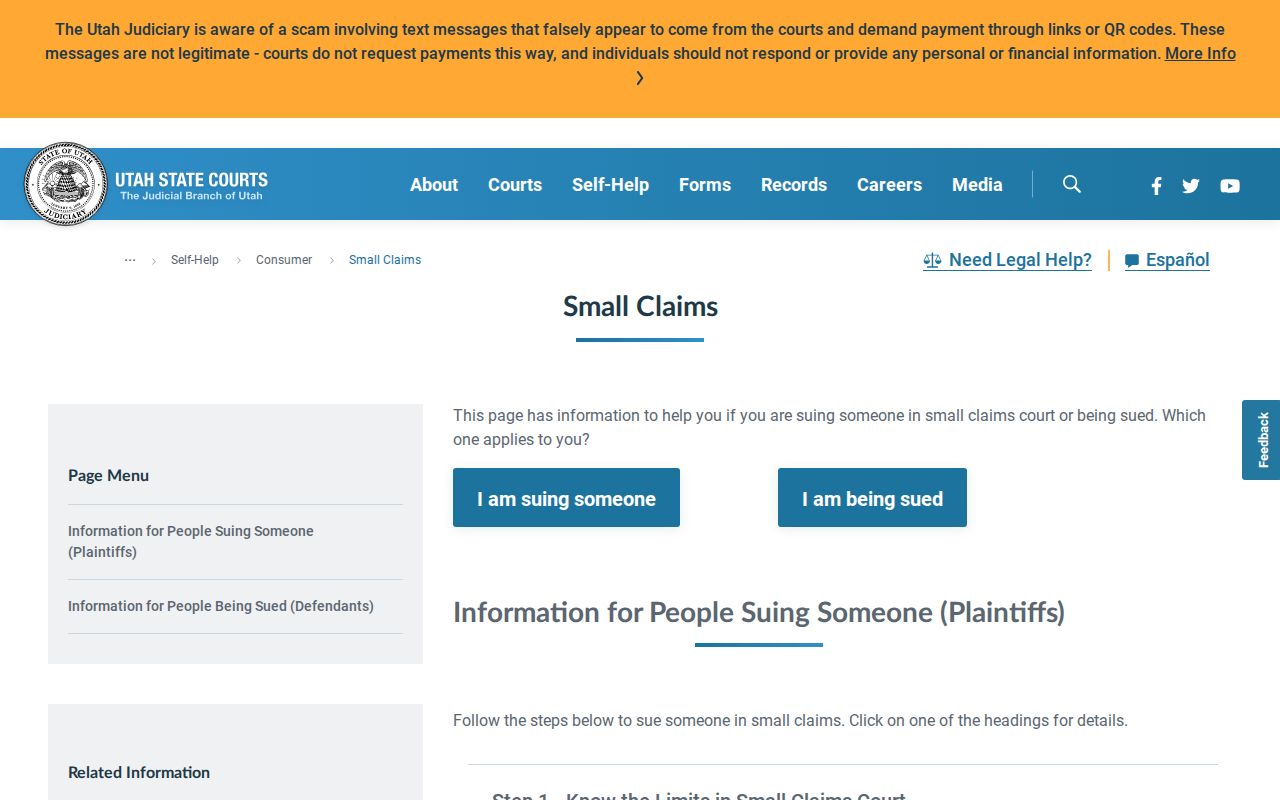
Use the case docket or clerk for criminal-history facts, then use the payment service only after confirming the correct Price matter and exact amount. A payment attempt by itself does not clear a warrant.
Where Price Records End Up
Price Police retains its report even after the case leaves city hands. The jail keeps custody and booking facts. Carbon County Justice Court or Seventh District Court keeps the filed case, based on offense level. Utah BCI maintains the fingerprint-linked Utah Computerized Criminal History file and receives reported outcomes. Each record answers a different question.
Record flow: Price Police Department › Carbon County Courts › Utah Department of Public Safety, Bureau of Criminal Identification.
Utah does not offer an unrestricted BCI public name search of someone else. A person seeking their own repository record uses BCI Right of Access and pays the current $20 fee. That statewide process should not replace a Price police request when the goal is the local incident narrative.
Price Police Safety Record Channels
Price Police publishes more than records forms. The Carbon Metro Drug Task Force accepts tips at 435-637-TIPS, or 8477. AlertSense provides reverse-emergency notices. Victim advocate information and pharmaceutical disposal details also appear through the department. These are public-safety services, not criminal-history databases.
The distinction protects both the reader and the office. A tip line sends new information to law enforcement. It does not return an incident report. AlertSense sends urgent notices; it does not show a person's Price record. A report request seeks an existing releasable file. Use the published phone or form that fits the task.
Price Police Records Versus Cases
A Price report may contain the event time and place, officer observations, witness accounts, property or evidence references, and the reason for an arrest or no arrest. The city may remove private identifiers or protected facts before release. The court record starts later and focuses on the prosecutor's filed counts, hearings, pleas, rulings, disposition, sentence, and financial entries.
The Carbon County Attorney's official page documents the prosecutor's role and the local Drug Court program.
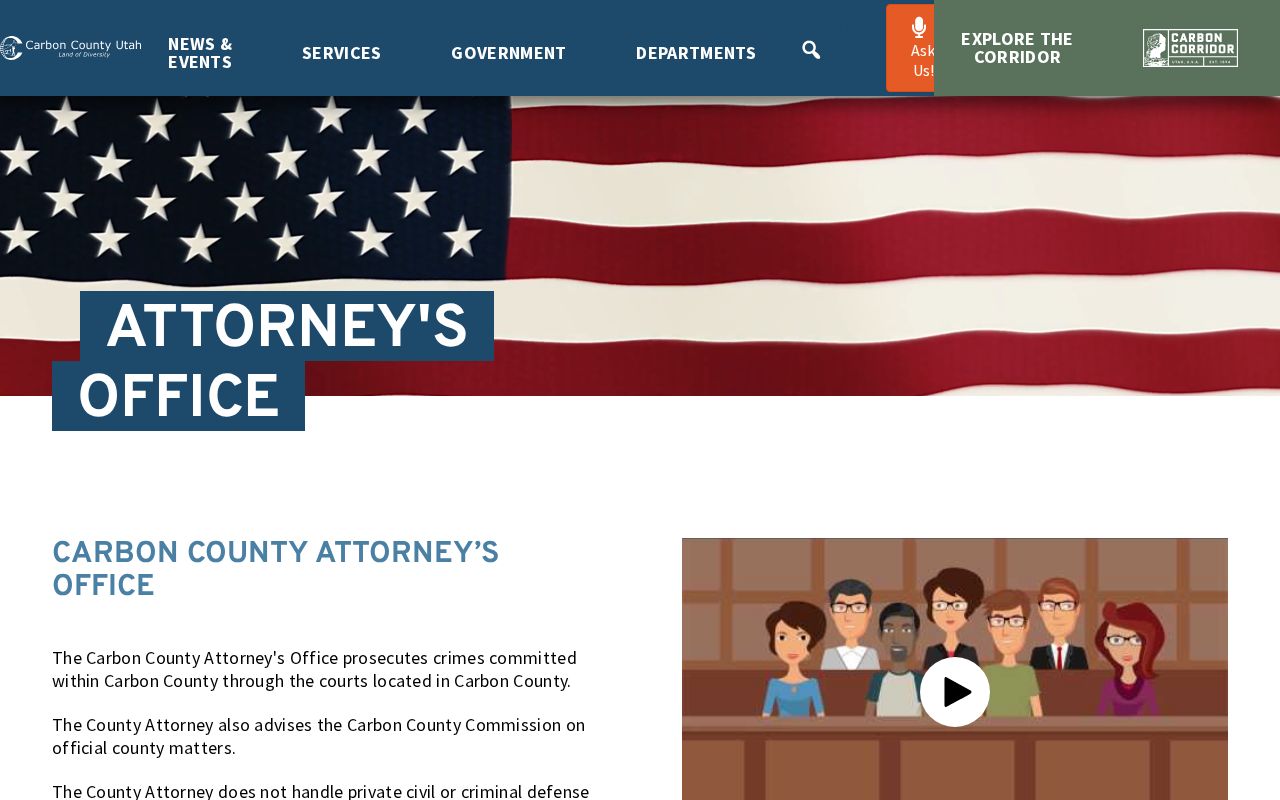
That county office reviews cases for prosecution, but it is not the Price police-records counter or public court index. Its JustWare system is an e-prosecution and discovery channel, not a public criminal-record search.
Price readers who want the final outcome should move from the city report to the proper court. A dismissed count can remain visible in a public file until a lawful restriction or expungement applies.
Public Access Rules
Price Police records fall under Utah's Government Records Access and Management Act, known as GRAMA. The law permits inspection and copying of public government records while allowing private, protected, sealed, and other restricted material to be withheld or redacted. A focused description makes it easier for Price staff to identify the requested file.
Key statutes and rules:
Utah Code §63G-2-201 creates the public right to inspect and copy records, subject to classification.
Utah Code §63G-2-204 sets standards for a written request and agency response.
Utah Code §53-10-108 limits criminal-history dissemination and preserves the subject's own-record route.
Judicial Administration Rule 4-202.02 classifies court records for public, private, protected, sealed, and juvenile access.
Juvenile records, victim-sensitive facts, personal identifiers, active investigative material, and expunged or sealed cases may not be public. A denial or redaction does not mean the event never occurred. It means the custodian applied an access classification to the requested Price record.