
Running a Sex Offender Check in Carbon County
The official starting point is the Utah Department of Public Safety entry to SONAR, the Utah Sex, Kidnap, and Child Abuse Offender Registry. DPS maintains the statewide system under current Utah law. A user first accepts its conditions, then can narrow results to Carbon County by name, address, city, ZIP, county, or available map controls. The search works best when the user has more than one fact, since a shared name alone may point to the wrong profile.
Local offices add a second channel. Carbon County Sheriff registers people who live in its jurisdiction, while city police handle residents within their service areas. People supervised by Utah Department of Corrections Adult Probation and Parole register through AP&P. Those channels do not replace SONAR for public searches. They are the right contacts for appointment rules, suspected noncompliance, or facts that seem wrong. Immediate danger should go to 911.
Carbon County SONAR Entry Rules
SONAR opens with a mandatory warning. The notice explains that registered people supply much of the information and that DPS cannot promise every field is complete or current. It also bars threats and harassment. Accepting that notice is part of the search process, not a minor pop-up that can be ignored.
The DPS registry entry page shows how the state routes the public to its offender system.
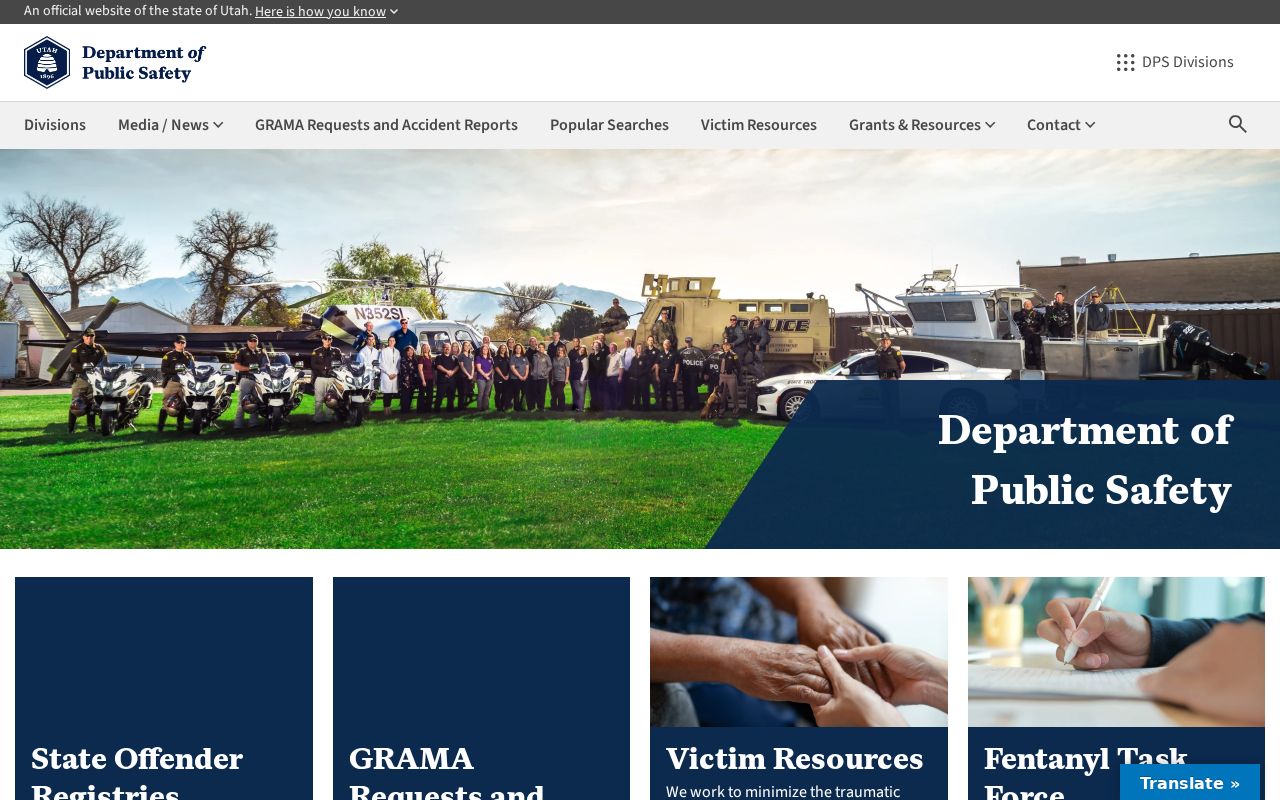
That state gateway matters in Carbon County because it points readers to the current SONAR system and its required terms, rather than an old statute or an unofficial list.
Searching the Utah Sex, Kidnap, and Child Abuse Offender Registry
A careful Carbon County registry search begins broad enough to catch a valid result, then narrows with place details. The map and list views serve different needs. List view supports profile review, while map view helps a user understand locations around an address. Search results should still be checked against the full profile.
- Open SONAR through Utah DPS and read the full disclaimer before acknowledging it.
- Enter a first and last name, or use an address, city, ZIP, county, state, or radius control.
- Review the Carbon County results in map or list view and compare more than one identifying field.
- Open the full profile, check its registration status, offense, residence information, and update context.
| Field Label | Type | Required | Notes |
|---|---|---|---|
| Disclaimer acknowledgment | Entry gate | Yes | Must be accepted before using SONAR |
| First and last name | Text | No | Use both when known |
| Address, city, ZIP, county | Geographic criteria | No | Carbon County can be selected |
| State and radius | Dropdown controls | No | Supports a place-based search |
| Map and list | Result views | No | Switch views to review location and profiles |
| Phone or online identifier | Limited reverse search | No | Returns a linkage response, not a person's identity |
Carbon County Registry Address Alerts
SONAR's OffenderWatch tools include email or address-based proximity alerts where enabled. An alert can support ongoing awareness near a Carbon County address without forcing a resident to repeat the same manual search. Map and list results remain snapshots, so notification tools are useful when a move or status change may affect the area being watched.
An alert does not establish danger, guilt for a new event, or a violation. It signals that the user should open the official profile and read the current fields. If a detail appears stale, contact the law-enforcement agency with jurisdiction. Do not confront a listed person or family.
What a Registry Profile Shows
Utah law defines which public fields may appear. A SONAR profile can join identity, location, offense, and compliance data that would otherwise sit in separate records. It may also show workplace, school, vehicle, license, custody, or supervision facts when the statute calls for publication. The record should be read field by field, because a registration status is not the same thing as a new criminal charge.
| Name and aliases | Published identity names used to distinguish the profile. |
|---|---|
| Photo and description | A recent photo plus allowed physical and birth information. |
| Residences | Primary and additional registered locations that may be published. |
| Offense details | Registrable offense, conviction jurisdiction, and conviction date. |
| Other identifiers | Vehicles, scars, marks, tattoos, professional licenses, and other statutory fields. |
| Registration status | Compliance, custody, or supervision information shown by the registry. |
Qualifying juvenile data is maintained but not placed in the public result. The limited reverse search for a phone number or online identifier is also narrow by design. It may confirm a link to registry data, but it does not reveal the registrant's identity.
Carbon County Registration Terms
Utah does not publish generic low, medium, and high risk labels. It also does not use a public Tier I, II, and III scheme for Carbon County profiles. The public system is based on the qualifying offense and a ten-year or lifetime registration term under Utah Code Title 53, Chapter 29. A searcher should avoid assigning a risk label that SONAR itself does not publish.
This distinction prevents a common mistake. A ten-year term does not mean the registry has rated a person as low risk, and lifetime registration does not function as a public high-risk score. The term reflects the statutory category. Profile facts, current status, and the underlying conviction information provide the sound basis for understanding the listing.
Registration Requirements and Levels in Utah
Utah's offense-based terms start from the end of the sentence, not simply the conviction date. Outside-jurisdiction registrations depend on whether the other requirement is still active and on the corresponding Utah period. Some nonforce lifetime cases involving a person under 21 can be reduced after a sentencing-court determination. The result is more precise than a three-tier chart.
| Statutory category | Duration | Public treatment |
|---|---|---|
| Offenses in §53-29-203(1)(a) | Ten years after sentence termination | Public profile fields as allowed by law |
| Serious or repeat offenses in §53-29-203(1)(b) | Lifetime | Public profile fields as allowed by law |
| External-jurisdiction registrant | Active external term or corresponding Utah period | Depends on applicable requirement |
| Certain under-21 nonforce lifetime cases | Possible reduction to ten years after sentence termination | Requires a sentencing-court determination |
| Qualifying juvenile circumstances | Controlled by current statutory provisions | Maintained, but not publicly published |
Current law is Title 53, Chapter 29. Older pages may cite the superseded Title 77, Chapter 41. Carbon County residents should use the current chapter when checking duties or public access.
Carbon County Registration Offices
Registration location depends on supervision and residence. People under UDC supervision use Adult Probation and Parole. Region 6 Price serves Carbon County from 1365 South Carbon Avenue and can be reached at 435-636-2800. Others register in person with the sheriff or police agency that has jurisdiction over the residence. Carbon County Sheriff expressly provides offender registration service for its area.
Carbon County Sheriff
240 W Main St
Price, UT 84501
435-636-3251
Business office: Monday through Thursday, 7 a.m. to 5 p.m.
Region 6 Price AP&P
1365 S Carbon Ave
Price, UT 84501
435-636-2800
Call for current registration procedure.
The sheriff's public service information also points residents back to SONAR. Call the correct office for appointment rules before arriving. A city resident should contact that city's police department if it holds jurisdiction over the address.
The BCI fingerprint service page documents a different state service that can be confused with registration.
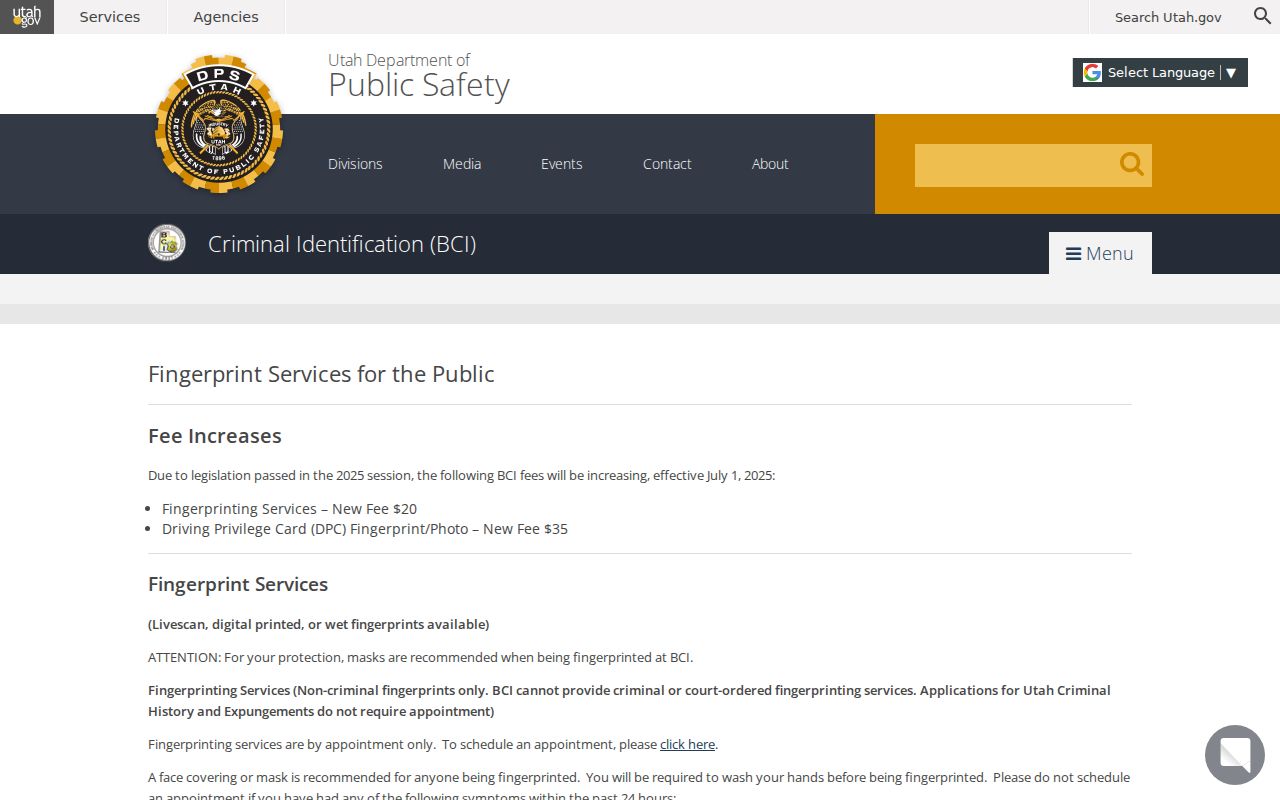
Fingerprint appointments and fees on that page concern BCI public fingerprint services, not a public SONAR name search or a Carbon County registration appointment.
Carbon County and NSOPW
SONAR is the best source for Utah-specific fields and Carbon County place searches. The National Sex Offender Public Website adds a cross-state layer maintained by the U.S. Department of Justice. NSOPW is useful when a safety check crosses Utah's border or when a person may have registry records in more than one jurisdiction.
The official NSOPW search interface gives Carbon County users a wider government search route.
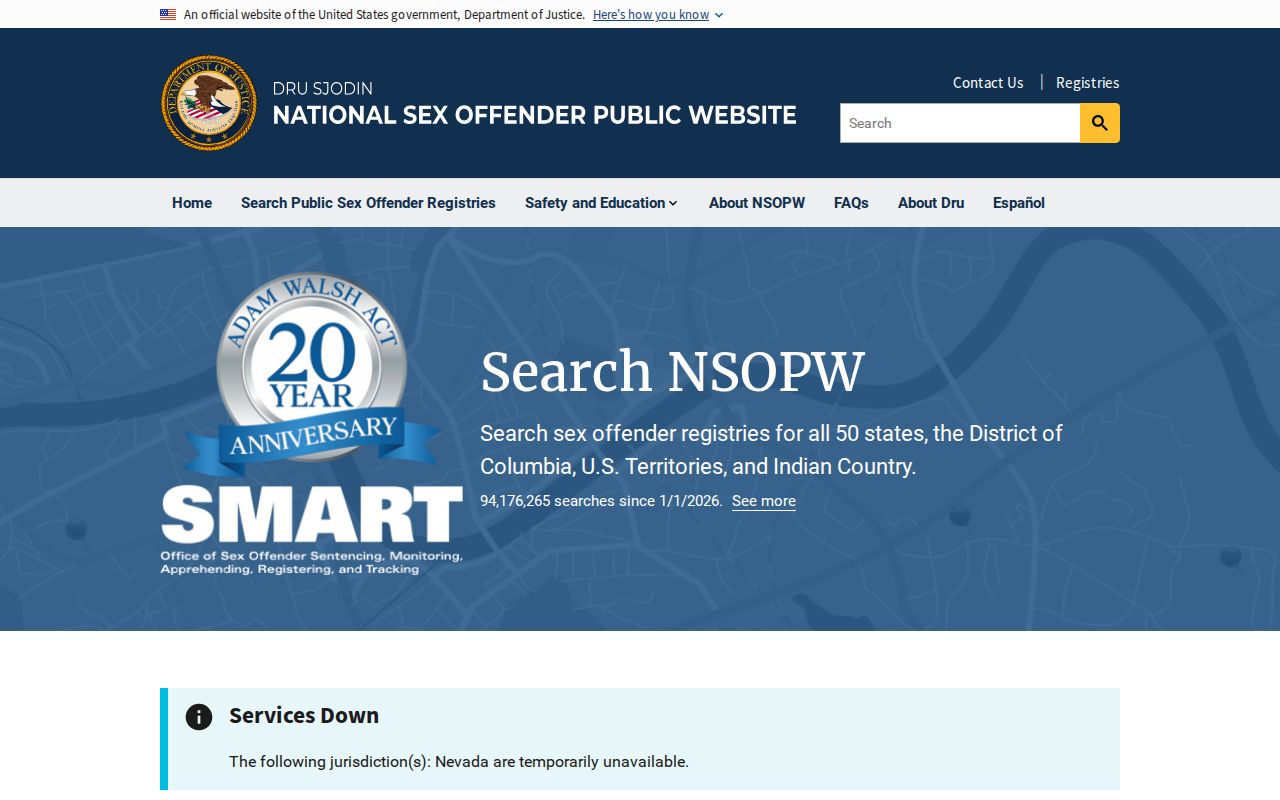
For a Utah result, return to SONAR for the state's current profile fields and disclaimer. Comparing the two official systems can resolve geographic gaps, but neither should be replaced with an unofficial people-search source.
Lawful Use and Community Notification
Registry access exists for public safety and community awareness. Use it to learn what the official record says, set an address alert, and plan sensible family precautions. If a Carbon County profile seems inaccurate or a listed person may not be complying, report the concern to the police or sheriff with jurisdiction. Emergency threats go to 911.
Use registry information lawfully: Utah's mandatory SONAR notice warns that harassment, stalking, or threats against a registrant or family may violate criminal law under Title 53, Chapter 29 and other applicable laws.
The registry is not a license for contact, intimidation, or vigilante action. It is also not proof of a new offense. Check the profile date and status, rely on official notices, and let law enforcement investigate a suspected breach.
When a move, vehicle, workplace, or compliance fact appears inconsistent, save the official profile details and give the jurisdictional agency a clear account of the concern. Officers can compare that report with information that is not available to public users. Carbon County residents outside a city police boundary can call the sheriff's business office. A concern inside Price, Helper, or Wellington should begin with the police agency responsible for that address. The agency, not a private searcher, decides whether the facts support a compliance inquiry.
Families can pair a SONAR address alert with ordinary safety plans. Keep emergency contacts current, discuss safe boundaries in age-appropriate terms, and review a new official notice before acting on it. These steps use registry information for its stated community purpose while avoiding assumptions about a person based only on a pin on the map.